
Sent Crypto to a Casino on the Wrong Network? What to Do
A confirmed wrong-network transfer cannot simply be cancelled. Recovery depends on the destination, network and who controls the keys.
In this article10 sections
You copied the casino deposit address, sent the right-looking token and the balance never appeared. Then you notice that the network in your wallet did not match the network on the cashier screen.
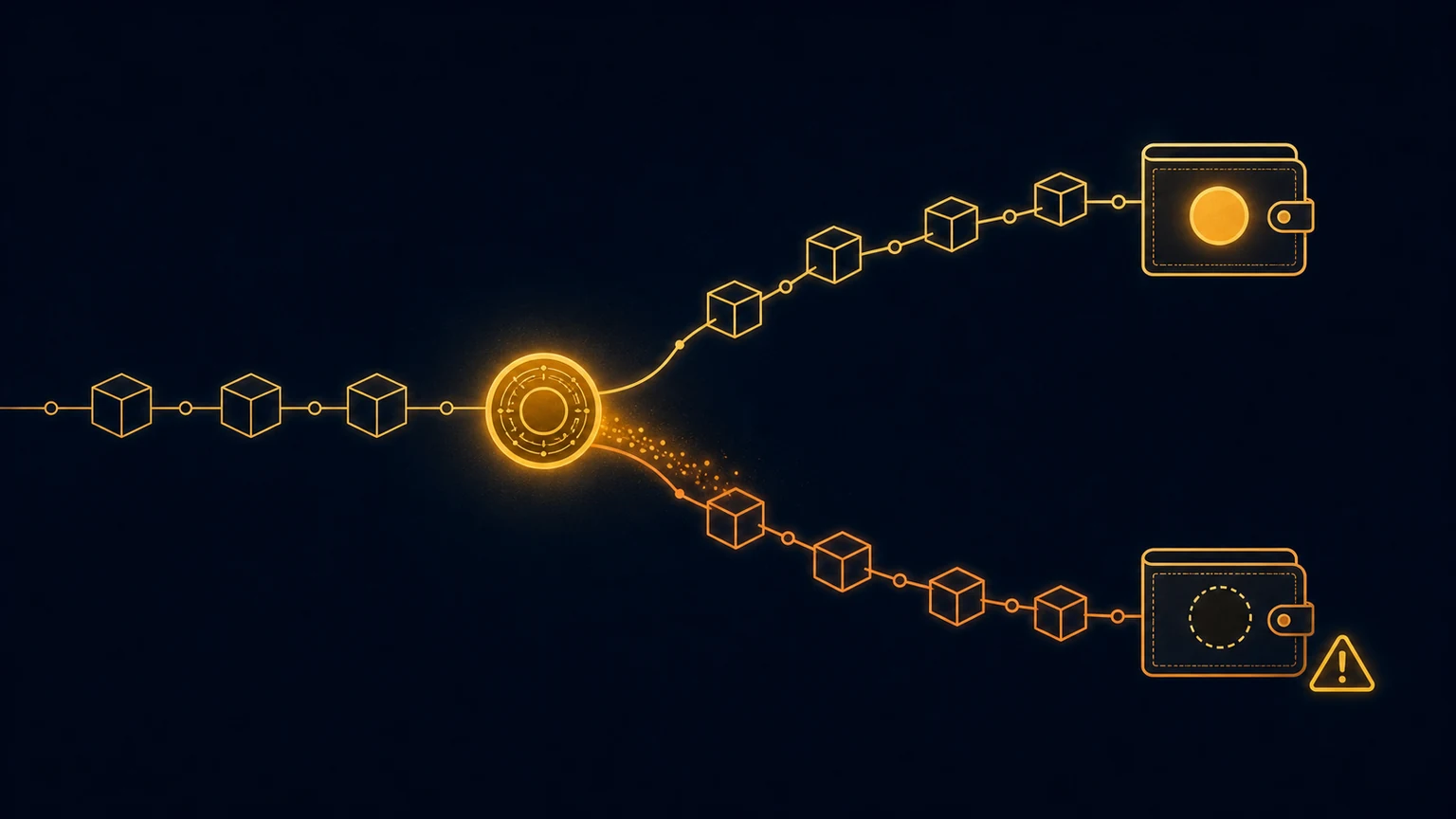
Stop before sending anything else. A confirmed blockchain transfer generally cannot be cancelled. Recovery, if available, depends on where the asset landed, who controls the destination keys and whether the casino or its payment processor can access that network.
Confirm what went wrong
Several deposit failures can look identical in a casino account:
- Wrong network: the cashier requested one blockchain but the transfer used another.
- Wrong token: the network was correct but the token contract or mint was not supported.
- Wrong address: the destination differs from the casino address.
- Missing memo or tag: a shared deposit address received the funds without the account reference.
- Pending confirmation: the transfer has not reached the operator's confirmation requirement.
- Below-minimum deposit: the transfer arrived but did not meet the displayed credit threshold.
Do not rely on the token symbol. Tether issues USD₮ on multiple blockchains, so “USDT” alone does not identify Ethereum, Tron, Solana or another protocol. CryptoHut's guide to choosing a USDT casino withdrawal network explains the matching step before a transfer.
Preserve the transaction record
Collect the evidence before contacting support:
- casino account username or ID;
- asset and amount;
- network actually used;
- network the cashier requested;
- destination address;
- transaction hash or ID;
- date and time;
- the original deposit instruction, if saved; and
- a link or screenshot showing the transfer on the appropriate block explorer.
For a token, also record its contract or mint address. Different assets can share a name or symbol.
Check the explorer for the network used
Open the explorer linked by the wallet or official network documentation. Search the transaction hash and verify:
- whether the transfer is pending, failed or confirmed;
- the destination address;
- the asset or token contract;
- the amount; and
- the network.
A failed transaction did not deliver the asset, although a network fee may still have been charged. A confirmed transaction reached the destination recorded on that blockchain. It does not prove that the casino recognised or credited it.
If the transaction remains pending, follow the wallet provider's official guidance. Do not trust an unknown service offering to cancel or accelerate it.
Compare it with the cashier instruction
Return through the casino's normal address and open the deposit screen. Check the exact asset, network, address, minimum and memo or tag requirement.
Take a screenshot, but do not immediately send another payment. Some platforms generate fresh deposit instructions, so a screen shown now may not prove what appeared when the original transfer was made. The transaction record and any earlier screenshot are the stronger evidence.
Contact official support once
Use the support link inside the signed-in account or the operator's verified help page. Describe it as a wrong-network deposit, not simply a missing deposit.
Ask who controls the address:
- the casino;
- a custodial wallet provider; or
- a third-party payment processor.
The visible casino may not hold the private keys or perform recovery itself.
Include the account ID, asset, amount, used network, intended network, destination address, transaction hash and timestamp. Ask support to confirm:
- whether the address owner can access the network used;
- whether manual recovery or account credit is supported;
- any minimum recoverable amount or official service fee;
- whether the asset would be credited or returned; and
- the case reference and expected review process.
Do not pay a fee until it appears through a verified operator or processor process and you understand what it covers. A fee does not guarantee success.
Understand the recovery scenarios
Same address on another EVM-compatible network
A token may exist at the same 0x address on the network used. When you control a standard self-custody wallet, the same account can often be viewed across EVM-compatible networks.
That does not give you access to a casino deposit address. Only the person or service holding the keys can move the asset. The casino or processor may lack the policy, tooling or operational access required for recovery.
Supported token on an unsupported network
The transfer may be valid on-chain but invisible to the casino's normal deposit system. Manual recovery or credit may be possible if the address owner can access that network. It should never be assumed.
Unsupported token on the correct network
The address can receive a token that the platform does not monitor. Recovery again depends on the address owner and its support policy.
Correct address without a required memo or tag
Funds may have reached a shared receiving wallet without the reference needed to map them to an account. Support may be able to locate the transfer after verifying the transaction and user.
Confirmed transfer to an unrelated address
The party controlling that address is the only party that can return the funds. Blockchain support cannot reverse a confirmed transfer.
Provider recovery tools are also limited. Coinbase, for example, supports recovery for selected assets and networks while warning that wrong-network transfers are not generally recoverable through normal support. The exact provider and transfer path determine the options.
Never share wallet secrets
A transaction hash and public address allow someone to inspect public blockchain data. They cannot authorise a transfer. A seed phrase or private key can.
Do not:
- reveal a seed phrase, private key, password or two-factor code;
- install remote-access software for a stranger;
- connect a wallet to an unverified recovery site;
- sign a message or transaction you do not understand;
- send a “release fee” to an agent's personal address; or
- trust a direct message because it uses the casino's logo.
Use support links from the casino account. If a processor is involved, ask the casino to identify it within the existing ticket.
Prevent another network mismatch
For each new deposit route:
- open a fresh cashier instruction instead of reusing an old address;
- match the asset and exact network at both ends;
- check the token contract, memo or destination tag;
- confirm the minimum and network fee;
- send a small test that remains above the stated minimum;
- wait for it to credit before sending more; and
- save the transaction ID.
A test transfer costs another network fee, but it verifies the asset, address, network and credit path before more value is at risk. CryptoHut's Bitcoin deposit guide, crypto wallet guide and withdrawal checklist cover the wider process.
The bottom line
“Wrong network” does not have one universal outcome. A confirmed transfer is final on its blockchain, but the destination owner may sometimes retrieve or manually credit the asset. Preserve the evidence, identify the network and address owner, use official support and never exchange wallet secrets for a promise of recovery.
Build a useful recovery request without exposing your wallet
Keep a private record with six fields: asset, amount, sending network, intended receiving network, destination address and transaction ID. Add the time and the casino support ticket number. An explorer link makes the request more useful than a screenshot containing only “completed.”
Send the record through the operator's official support route. Ask: “Does your payment provider control this destination on the network I used? Can it assess recovery, and is any fee disclosed through this official ticket?” Support may need to involve a custody provider. Do not treat an estimate, a fast reply or a fee request as a guarantee of recovery.
A confirmed transfer cannot be cancelled by changing settings in your own wallet. Adding a network can help display funds only where the relevant keys are controlled by that wallet; it does not give you control of a casino's address. See MetaMask's wrong-destination guidance.
Never give anyone a recovery phrase or private key. Keep unrelated balances and personal documents out of public screenshots. If a stranger contacts you about recovery, return to the official support channel independently. For transactions that have not yet been broadcast or confirmed, identify the stage using the withdrawal troubleshooting guide.
Sources & verification5 sources
Sources & verification
Sources below support specific parts of the article. The page was last updated on ; the listed sources were checked on . Unless the article explicitly describes a dated CryptoHut test, operator figures remain operator-stated and external documents are third-party evidence—not first-hand testing by CryptoHut.
- How to use an Ethereum walletExternal source · Ethereum.orgSupports: Same-network checks, block-explorer use, EVM address context and confirmed-transaction finality; not casino recovery capability.
- Supported Tether protocolsExternal source · TetherSupports: USD₮ availability across multiple blockchains and the need to distinguish an asset from its transport network; not support at a specific casino.
- Funds sent on the wrong network or addressExternal source · MetaMaskSupports: Wrong-network, wrong-address and EVM self-custody distinctions; not access to a custodial casino address.
- Send and receive troubleshootingExternal source · CoinbaseSupports: Network matching, explorer checks and provider limits after an incorrect transfer; not a promise of recovery.
- Recover unsupported cryptoExternal source · CoinbaseSupports: An example of a provider recovery tool limited to eligible assets and networks; not a casino-wide recovery standard.
Sources are listed so readers can check the central claim themselves rather than take the byline on trust.
Frequently asked questions
Are wrong-network casino deposits recoverable?
Sometimes, but there is no guarantee. A token sent to the same address on another EVM-compatible network may be accessible to whoever controls that address. Recovery still depends on the casino or payment processor's custody, policy and tooling.
What should I give casino support?
Provide your account ID, asset, amount, network used, intended network, destination address, transaction hash, timestamp and original cashier instruction if available. For a token, include its contract or mint address. Never provide a seed phrase, private key, password or two-factor code.